Understanding Pike Behavior:
A Scientific Look at a Freshwater Predator

Northern Pike, Esox Lucius, is a fearsome freshwater predator that hits every benchmark one looks for in an apex predator. Speed, camouflaged pattern, teeth like daggers, and a distinct lack of fear that will often times bring a fish right up to the boat or bank to look you in the eye before engulfing your lure whole right before your eyes. Esox is synonymous with warm, weedy lakes and rivers, and the pole bending, heart pounding fights that come with them.
Life Cycle of the Northern Pike
Northern pike undergo significant development from spawn to maturity, starting their life journey with a preference for aquatic plants from birth. They reach sexual maturity between two to three years, although size is more critical than age for breeding purposes. The spawning season for pike begins in early spring, with a required water temperature of about 40 degrees Fahrenheit. This period sees both male and female pike feeding almost feverishly to prepare for mating, packing on weight for the energy intensive activities to come. Females can release tens of thousands of sticky, amber-colored eggs, which, after fertilization, attach to the surface of aquatic plants. The initial stages of a pike's life are crucial, with young pike (sac fry) depending on their yolk sac for nourishment before transitioning to feeding on plankton and eventually other smaller fish. From there, anything that fits in the toothy maw is fair game and the growth can be explosive.
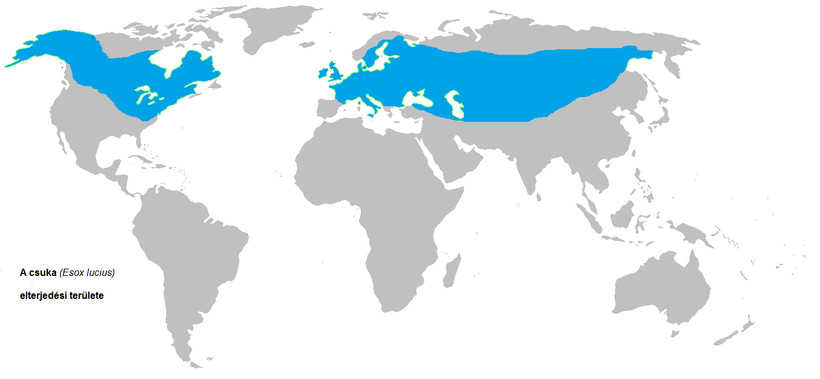
Map of pike range photo credit to Wikipedia
Habitat and Range
Northern pike are adaptable, thriving in various freshwater environments that offer abundant aquatic vegetation. They can be found all throughout Canada and the Northern regions of the USA in lakes, rivers, and even streams. The European counterparts grow even larger than in North America, specimens over 25 pounds are not uncommon and fish over 30 pounds a goal. The range of this fish is so massive it has led to controversy surrounding the origins of this species. While the jury is still out, and new evidence emerges every day, we can safely say that pike can be found in most freshwater, vegetation dense waterways North of the equator. This vegetation is crucial throughout their lives, providing both a hunting ground and protection from predators. Their habitat preference includes clear, vegetated lakes, quiet pools, backwaters of creeks, and small to large rivers. Pike's territorial behavior becomes more pronounced with age, often occupying fixed territories during their youth to avoid predation and expanding their hunting grounds as adults. This territorial nature is vital for anglers to understand for successful fishing. Cover water, target ambush points, and matching the hatch can help produce sizable fish with regularity. When bluelining, focus on the deeper pools and weeded shorelines to maximize chances of finding pike.
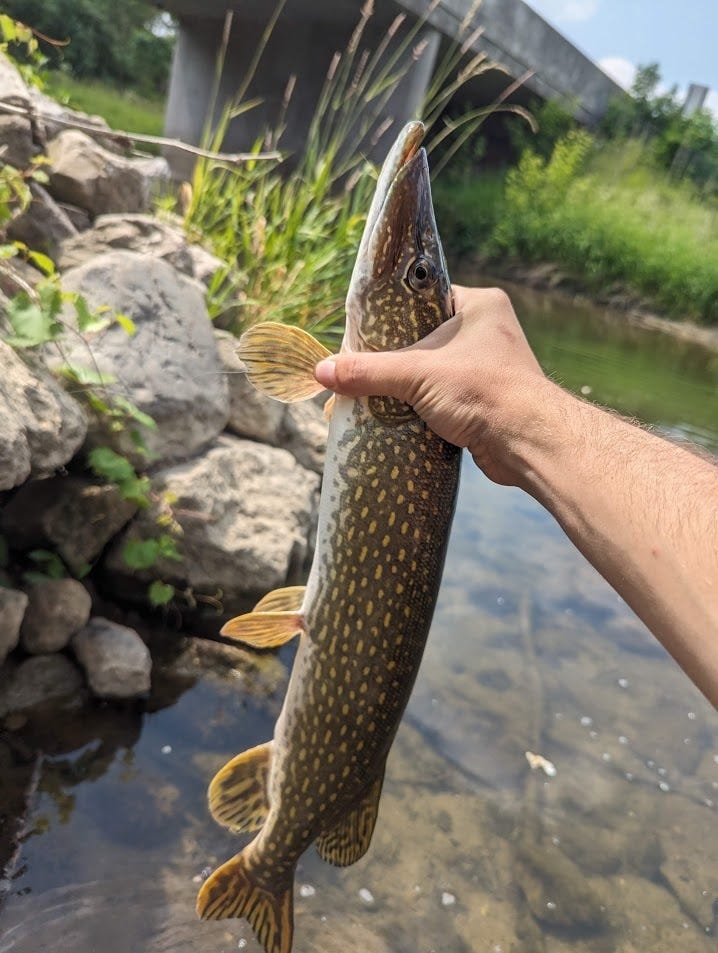
A small Esox out of a smaller creek.
Feeding Habits and Diet
The Northern Pike's journey from birth to apex predator is marked by a fascinating progression in feeding habits and dietary preferences. This transition not only underscores their adaptability but also their role in maintaining the ecological balance of freshwater habitats.
Early Life (Sac Fry Stage): Upon hatching, young pike, known as sac fry, rely on the nourishment provided by their yolk sacs. During this vulnerable phase, they are hidden among aquatic vegetation, safe from predators and strong currents, patiently absorbing the nutrients needed for the next stage of life.
Youth (Plankton-Eating Phase): As they grow and their yolk sacs deplete, juvenile pike advance to feeding on microscopic organisms. Plankton, both phytoplankton and zooplankton, becomes their primary source of sustenance. This diet is crucial for rapid growth and development, setting the foundation for their predatory capabilities.
Adolescence (Small Fish Phase): With an increase in size and hunting ability, adolescent pike begin targeting larger, more mobile prey. Small fish, such as minnows and juvenile fish of other species, become their prey of choice. This stage is critical for learning and mastering the ambush tactics that pike are famous for. Their hunting behavior is almost playful and presents a fun challenge on most bass equipment.
Adulthood (Varied Diet): As fully grown adults, Northern Pike are not picky eaters. Their diet expands to include a wide variety of fish, including perch, walleye, and even smaller pike. Larger pike have been known to prey on amphibians, birds, and small mammals that venture too close to the water's edge. This diverse diet reflects their top position in the food chain and their importance in controlling the population of other species.
Understanding the Northern Pike's feeding habits offers invaluable insights for anglers looking to mimic their natural prey through lure selection and fishing techniques. Whether it's a small spinner that imitates a fleeing minnow or a larger, jointed lure that resembles a weakened fish, matching the pike's current dietary preference can significantly increase your chances of a successful catch. Remember, the key to enticing a pike lies in presenting it with something that mirrors its natural prey in size, movement, and coloration.
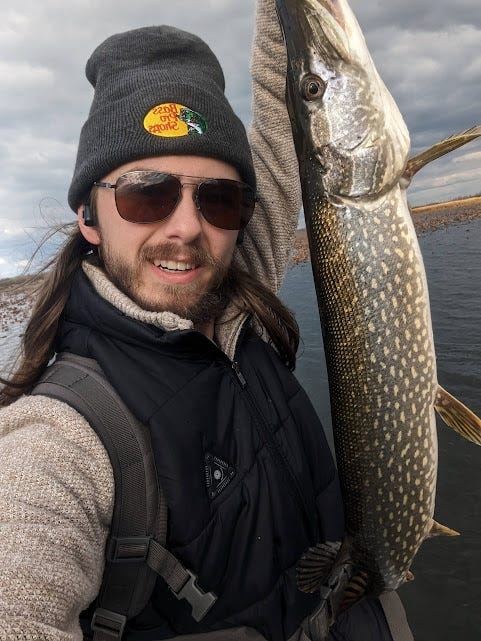
Fall pike fishing in the shallows and stubble of lily marshes can produce sizable specimens from the bank.
Seasonal Behavior Patterns
Seasonal changes significantly influence northern pike behavior, affecting their feeding habits, territorial range, and spawning activities. Understanding these patterns can help anglers better target pike throughout the year, using changes in pike behavior to predict their location and feeding times. In early spring pike will begin feeding heavily on shad and baitfish in preparation for spawning. Jerk baits and shallow diving stick baits can be quite effective during this time as fish are often in shallow water around the stubble of weeds. On sunny days fish can even be seen with their backs out of the water, soaking up every bit of sun they can looking for some comfortable, 50 degree plus water. They lay their eggs in these weed choked shallows and them move out to deeper water as it warms. By summer most pike found in the shallows will be young of the year or juveniles looking for some easy prey, making for fun sport on light bass tackle. Be mindful of the teeth, they shred mono and even braid. Fall brings the large pike back in to shallow waters or at least to the edge of the deeper areas to haunt. Trolling can be effective throughout the summer and early fall. Large baits trolled low and slow can find the biggest fish in the lake. Savage Gear makes some excellent pike baits in a variety of patterns and presentations. Around my usual spots the pike eat a lot of perch and stocked rainbow trout, so the thru line perch has become a go to for clear water where I value visual realism. Bass Pro Shop makes their own jointed swimbait in a few sizes that makes an excellent cost effective substitute in just about any box. One of my largest smallmouth bass was caught while fishing one of these loud, clacky perch swimbaits from BPS looking for pike on the Huron River. The multiple segments gives it an added noise and vibration that really produces well in more open water or when faced with darker, or more turbid conditions. Knowing how to match your lure presentation to the conditions takes time, and most importantly experimentation. There are parts of the year where pike on a particular body of water might eat mostly topwater bird presentations due to seasonal nesting habits of local birds. This is where local baitshops and anglers come into play. A quick stop for a drink and a chat can rapidly turn into a new honey hole or secret weapon on your tackle box.
.
Story Time
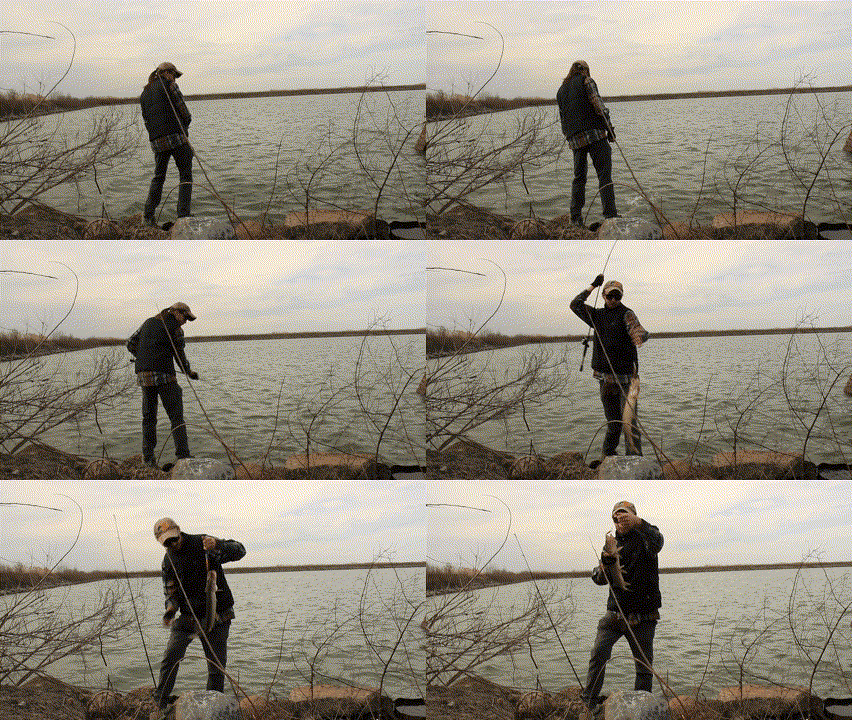
One such stop for advice and snacks at a bait shop on a warm October day led me to a new marshland and abandoned harbor which offered a perfect overlap of pike habitat. A few lures where the least I could do to thank the owner for the very specific location he offered, and after letting the owner pick my two new pike lures I walked out of the bait shop armed with a silver and blue jerk bait and a chartreuse spinner. The day quickly went from good to great as I worked my way along the dying lily pads and cattails with the spinner, catching bass after bass. Several of these spunky bass sported melanistic spotting on then and several other scars from something much larger. With images of toothy monsters and narrow escapes in my mind I switched to the five inch long shallow diving jerk bait. A long cast past a bunch of lilies, a slow and deliberate retrieve, then a pause. One... Two... Three quick snaps of my rod tip dart the lure back and forth, and then it hovers, twitching in the dark water. One... Two... Three... Four... Another quick snap of the rod tip to give it a feeble attempt to dart away. Suddenly the line felt heavy and any illusion to what might have been responsible vanished almost immediately. A boil appeared on the surface yards in front of me and the tell tale olive silver flash of a pike rolling and thrashing in protest. It wasn't a huge pike, but it proved I was on the right stuff. It really came down to a quick, friendly chat with a fellow angler who had many more years experience than I do, and was willing to let slip with a bit of his treasure he had collected over the years. This spot is the crown jewel in my pike fishing crown. I hope one day to be able to share this spot with a select few friends and anglers that have that certain je ne sais quoi. Anybody that has felt the power of the pike knows what it is to look for a word to describe the sensation, the experience, and every word that follows feels empty compared to the memory, to the experience. The description, of the indescribable. The tug is the drug.
.
Conservation and Population Management
Large northern pike are a rare treat in many areas. In the Midwest our fisheries produce many sizable fish but many of them are dwarfed by what European canals and locks produce. There is a distinctive reverence that European angling has that angling in the states has not imported, and perhaps it's time we have. A pike around 15' is already a few year old specimen, by five years they usually will hit full maturity and begin creeping closer to 28" in length. While a respectable adult pike will usually be around 24"-34" they can get much larger and live as long as twenty years. Given the opportunity and careful handling, they can be very large and long lived fish capable of ferocious fights and stunning strikes. Protecting the habitat that these fish use will also help their food supply grow as well. Big fish eat a lot, and a healthy fishery needs a lot of forage if it is going to produce sizable fish for many years. Lilly pads, bullrushes, and drainage ditches all represent vital habitat that is often disrupted by human activities and pollution. By taking care to protect these areas we can ensure we can pass along not only stories of the greatest catches but promise tomorrow a chance at an even bigger one.
The Story Continues
Our journey through the life and lore of the northern pike, from its humble beginnings to its stature as a formidable predator, underscores the intricate balance of nature and the importance of conservation. This exploration has not only showcased the pike's fascinating behaviors and seasonal patterns but has also highlighted the need for mindful angling and habitat preservation.
As we wrap up our discussion, I encourage you to share your own pike encounters, insights, or conservation efforts in the comments below. Your experiences enrich our collective knowledge and foster a deeper connection with these majestic creatures.
Let’s continue to celebrate and protect the northern pike, ensuring it remains a symbol of the wild waters we cherish. Share your pike story below and join the conversation in preserving the legacy of this incredible species.